Troglodiplura: The Blind Stealth Predators of the Nullarbor
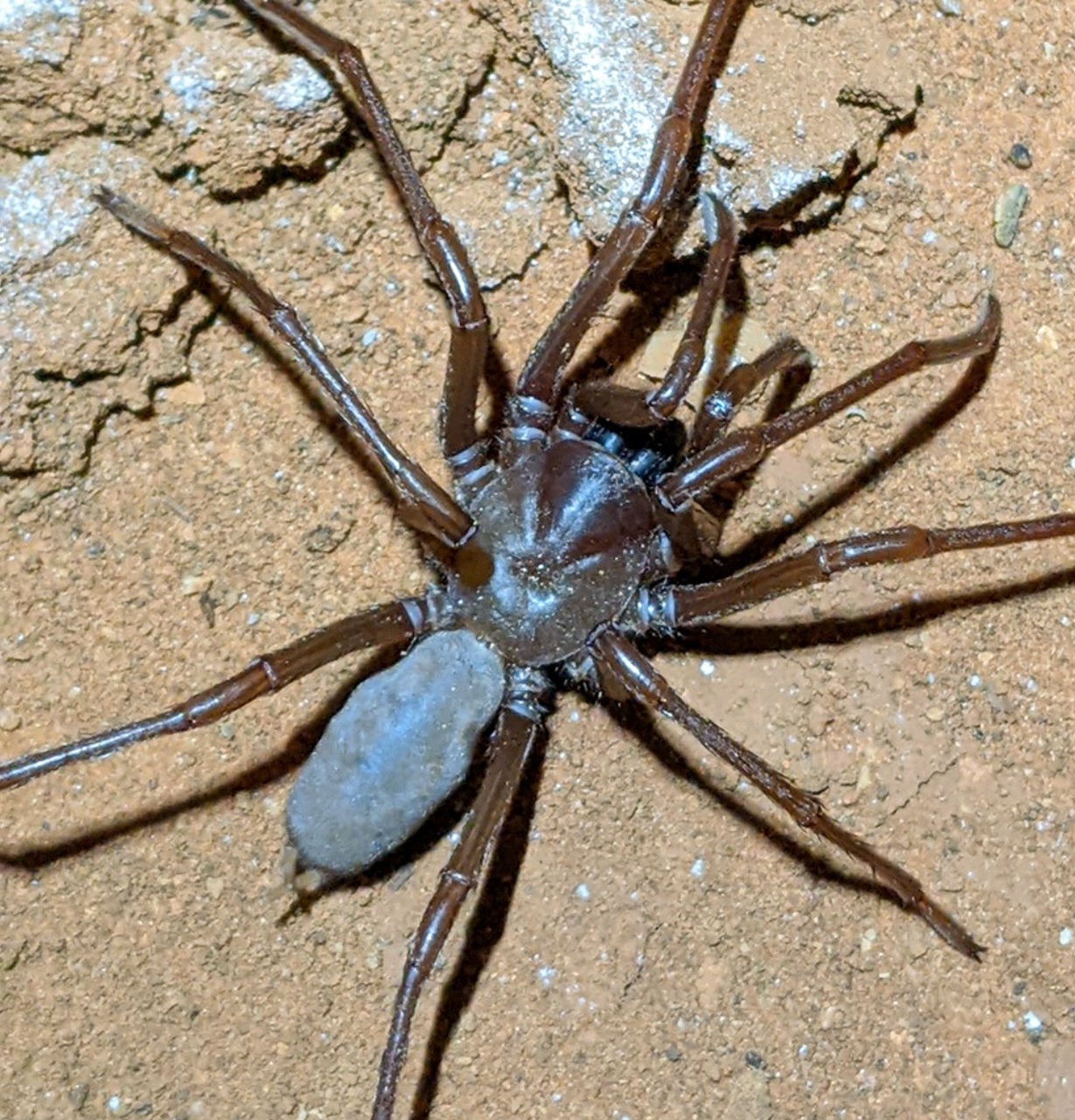
Very few people have ever seen a live blind spider from the Nullarbor. Until recently, the genus Troglodiplura was known to science only from juveniles or fragments of dead specimens.
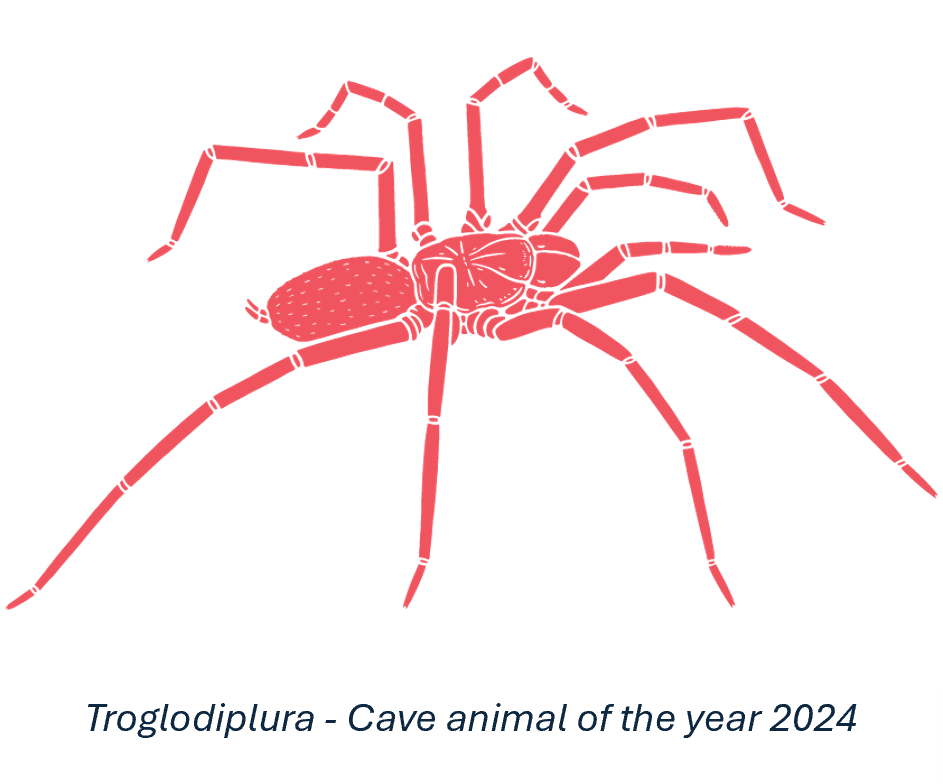
The blind cave spiders of Troglodiplura are large, striking animals that show several adaptations to permanent underground life, including elongated limbs and a complete absence of eyes. Unusually for cave-adapted species, they have retained their ancestral pigmentation.
Troglodiplura belongs to an ancient group of spiders, the Mygalomorphae, which includes tarantulas, trapdoor spiders and funnel-web spiders. Mygalomorphs possess distinctive downward-pointing fangs rather than the opposing fangs seen in most other spiders. In Troglodiplura, these fangs can reach 8 mm in length, an impressive armament for a stealth predator navigating the dark.
Islands Underground
The Nullarbor is one of Australia’s most iconic natural landscapes: an ancient, treeless plain underlain by an immense network of caves. Stretching roughly 850 kilometres east to west across South Australia and Western Australia, it is one of the world’s largest arid karst systems, covering around 200,000 square kilometres.
These hidden, remote and largely inaccessible caves offer insights into past geological epochs, including the formation of limestone, fluctuating sea levels and continental movement. When the Nullarbor last emerged from the sea around 14 million years ago, its sediments lithified into limestone, and vast eucalypt woodlands came to dominate the surface.
A warm, wet climatic phase occurred between approximately five and three million years ago, followed by progressive drying. The climate reached its present arid state around one million years ago.
It is likely that the ancestor of Troglodiplura entered the Nullarbor cave systems during this drying period. As the landscape became increasingly arid, populations diverged into the species we recognise today, occupying subterranean “islands” across the vast karst. Research also suggests that some caves may be connected by underground pathways that allow these spiders to disperse.
Fragile Worlds, Present Threats
Cave environments are fragile ecosystems facing numerous threats from human activity, including mining, groundwater extraction and contamination, surface development and climate change.
Across its known distribution, Troglodiplura faces substantial risks. These spiders are likely vulnerable to shifts in temperature and humidity driven by climate change, as well as predation from foxes and cats. Protecting them requires raising awareness of the ecological and scientific value of the Nullarbor’s cave systems.
Research Reference
Marsh, J.R., Milner, S.J., Shaw, M., Stempel, A.J., Harvey, M.S. and Rix, M.G. (2023). A Case for Below-Ground Dispersal? Insights into the Biology, Ecology and Conservation of Blind Cave Spiders in the Genus Troglodiplura (Mygalomorphae: Anamidae). Insects, 14(5), 449.
Learn more about Ancient Land Tours’ research and specialist field support on the Nullarbor and in Far West South Australia.